
Discussions around handwriting vs typing notes tend to follow a familiar pattern. Handwriting is often presented as the better method, supported by studies and explanations about the connection between the hand and the brain. In comparison, typing is framed as less effective and something that encourages shallow engagement with material.
While these arguments aren’t necessarily wrong, they often feel incomplete. They focus on the physical act of writing and note-taking rather than the process behind it.
A more useful way to approach the question isn’t to ask which method is inherently better, but to analyse what each method encourages the learner to do.
In practice, the difference is more about the behaviour it encourages, and less about the method itself.
Processing vs Transcription
One of the most significant differences between handwriting and typing is speed.
Typing allows information to be recorded quickly, often fast enough to keep up with a lecturer or presentation. In practice, this makes it easy to instead transcribe the presentation word for word without engaging with it. Research has shown that when using laptops, students are more likely to transcribe information, whereas handwritten notes tend to involve more summarisation and processing. This results in notes that resemble a script rather than a processed understanding of the material.
In contrast, handwriting is slower, which forces selectivity. It’s difficult to write everything down, so decisions have to be made about what is worth recording. That process of summarising, rephrasing, and filtering is where much of the learning occurs.
Overall, the difference is not simply the tool itself, but the level of processing it encourages.
The Trap Both Methods Share
It is easy to frame this as a clear advantage for handwriting, but both methods are susceptible to the same underlying issue.
Handwritten notes can also become transcription. It is entirely possible to copy slides or rewrite content without thinking about it, just as it is possible to type notes that are concise and well-processed.
The effectiveness of note-taking is not guaranteed by the method, and instead depends on how the method is used.
Spatial Thinking and Flexibility
Where handwriting does offer a clear advantage is in flexibility.
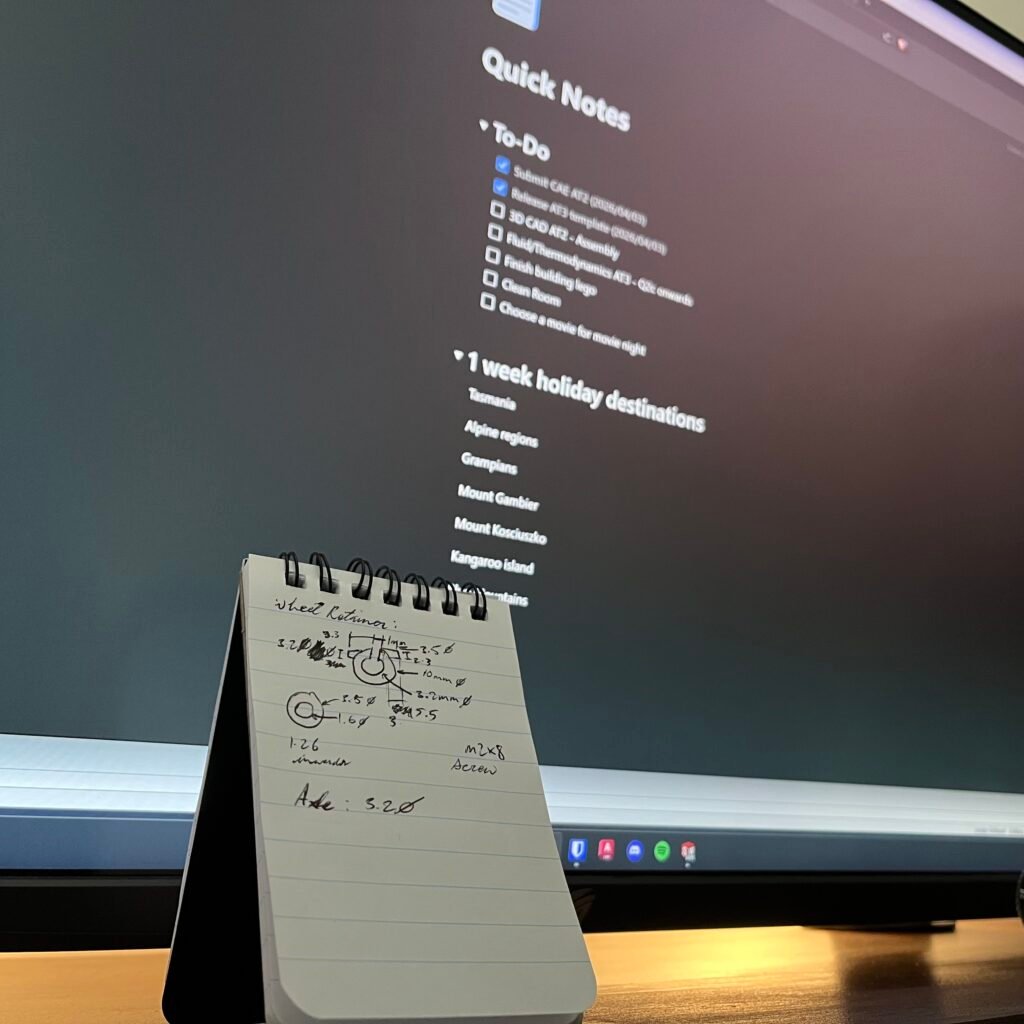
Handwritten notes are not constrained by linear structure. Diagrams, arrows, annotations, and non-linear layouts can be integrated naturally. This allows ideas to be organised spatially rather than sequentially, which can make relationships between concepts easier to see.
Methods such as mind mapping rely on this flexibility. They allow information to be structured in a way that highlights how ideas connect, rather than how they are presented in a lecture or textbook.
Typing, particularly in traditional note-taking formats, tends to encourage a linear flow. This can be useful for organisation, however, it can also make it more difficult to represent complex or interconnected ideas.
The Role of Digital Tools
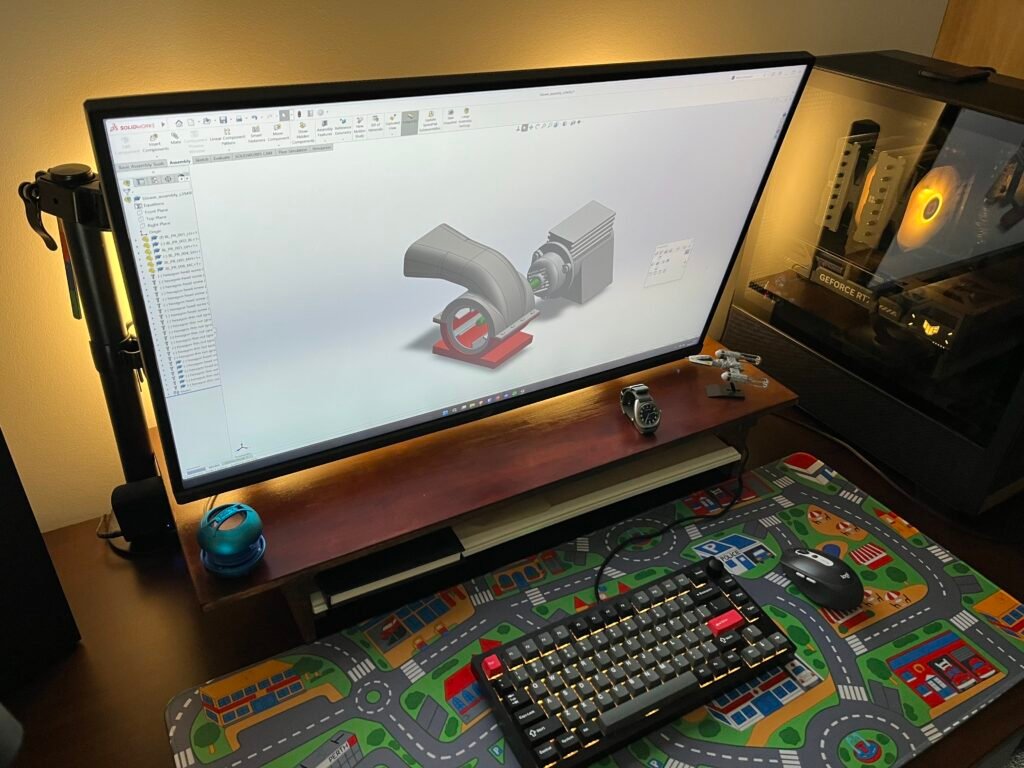
The distinction between handwriting and typing is no longer limited to pen and paper versus a keyboard. It is also shaped by the tools used.
Apps such as Notion and Obsidian are designed primarily for typed, structured notes. They emphasise organisation, linking, and management of long-term knowledge.
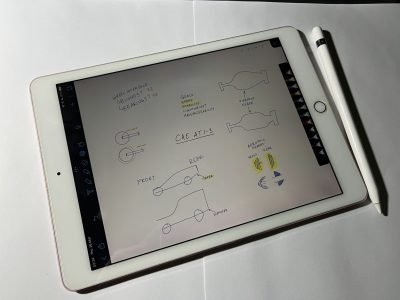
In contrast, tools like GoodNotes, Notability, and OneNote support handwriting within a digital environment. These allow users to combine the flexibility of handwritten notes with the advantages of digital storage and access.
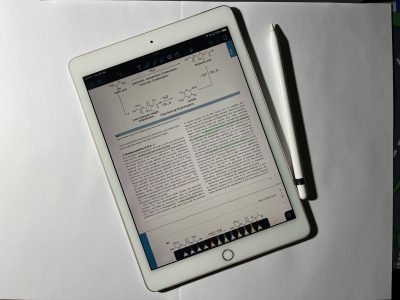
This creates a hybrid approach. Notes can be written by hand, while still incorporating lecture slides, PDFs, and other materials. Annotation becomes easier, especially for documents such as research papers, where writing directly onto the material can be more effective than typing separately.
The medium, then, is not only handwriting versus typing, it is also the design and capability of the tool being used.
Access, Cost, and the Reality of Note-Taking
One aspect that is often overlooked in these discussions is access.
The idea of choosing the “best” method assumes that all options are equally available. In reality, this is not always the case. Many students rely on a single device, typically a laptop, and use it for all of their work. Others may rely entirely on handwritten notes because they don’t have access to a suitable digital alternative.
Hybrid note-taking, while often presented as an ideal solution, requires specific hardware such as a tablet and stylus. Although these tools can be effective, they come at a cost that is not always justifiable.
There is also a growing tendency to frame note-taking through a consumer lens, where effectiveness is tied to specific tools or recommended setups. This shifts the focus away from the learning process itself and towards the tools being used.
Even when these devices are available, longevity becomes a factor. Older hardware can still perform adequately, but limitations such as battery life and software updates can affect usability. Upgrading is not always a priority when the existing setup remains sufficient, especially for students who are balancing other expenses.
The effectiveness of a note-taking method is determined by both how it works AND whether it is realistically accessible.
Subject Matters
The effectiveness of handwriting and typing can also depend on the subject being studied.
In disciplines such as mathematics or chemistry, handwritten notes are often more practical. It is not necessary to navigate through specialised formatting tools for symbols, equations, and diagrams. Instead they can be written quickly and naturally.
In more text-based subjects, typing can be equally effective if used properly. Structured notes, summaries, and organised information can be produced efficiently, provided that the process involves active engagement rather than transcription.
The method, therefore, should be considered in relation to the type of material being learned.

A More Useful Way to Think About It
Framing the discussion as a choice between handwriting and typing oversimplifies the issue.
A more useful question is not which method is better, but which method encourages better thinking in a given context.
Typing makes it easy to record information and handwriting often makes it harder to avoid thinking about it. Both methods can be effective, and both can fail, depending on how they are used.
Ultimately, the value of note-taking is not about the tool, but in the process it supports. This way of framing the problem, focusing on process rather than the tool itself, applies more broadly to how different mediums are evaluated.
References
- Mueller, P. A., & Oppenheimer, D. M. (2014). The pen is mightier than the keyboard: Advantages of longhand over laptop note taking. Psychological Science, 25(6), 1159–1168. https://doi.org/10.1177/0956797614524581
- Hembrooke, H., & Gay, G. (2003). The laptop and the lecture: The effects of multitasking in learning environments. Journal of Computing in Higher Education, 15(1), 46–64. https://link.springer.com/article/10.1007/BF02940852
- Ainsworth, S., Prain, V., & Tytler, R. (2011). Drawing to learn in science. Science, 333(6046), 1096–1097. https://doi.org/10.1126/science.1204153